
Motorcycle Shop Marketing in Dallas:
Website, SEO, and CRM
Built for Independent
Specialty Shops
Every digital marketing agency you'll find was built for OEM dealerships with co-op budgets and manufacturer support. Osiris is the first infrastructure built specifically for independent motorcycle shops — the builders, tuners, and specialists. Your buyer in Dallas searches for specific platforms and specific services. One territory per market. One anchor per vertical.
Why Motorcycle Shop Marketing Fails Most Independent Shops
The agencies that dominate the automotive marketing space were built for auto dealerships. In Dallas, as in every major market, they know how to move new car inventory, manage OEM advertising budgets, and handle high-volume service departments. That is a completely different business from an independent motorcycle shop doing custom builds, performance work, and relationship-driven sales.
When a dealership-trained agency takes on a motorcycle shop client, they bring the wrong architecture. Generic service pages. Broad keyword targeting. Ad spend on audiences that don't convert. And no understanding of how a motorcycle buyer actually researches and decides — which is nothing like a car buyer.
Your buyer searches for specific platforms and specific services. "Harley Road Glide stage 3 tune Dallas." "CBR1000RR suspension setup near me." "Ducati Panigale ECU flash." Those are not dealership searches. No dealership-trained agency is building pages around them. That's the vacancy. That's where independent shops can own territory.
Search "motorcycle shop marketing" right now. What ranks is a mix of generic agencies, dealership platforms, and parts brand marketers. Not a single result specifically built for the independent motorcycle specialty shop. That's not an accident — it's a gap nobody has filled. Until now.
Cruiser Shop Marketing and Sport Bike Shop Marketing Require Different Infrastructure
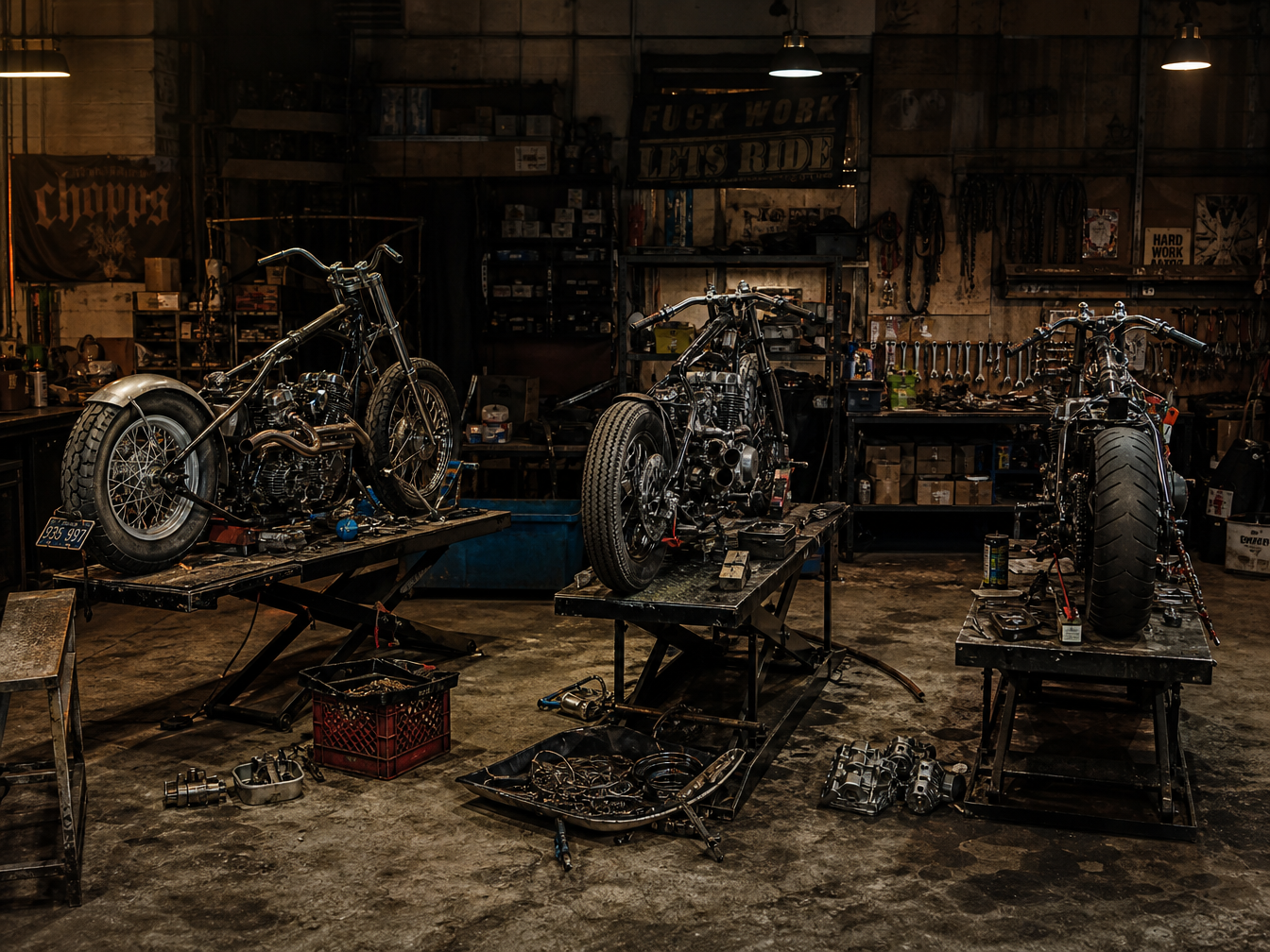
The motorcycle vertical isn't monolithic. A cruiser and touring shop runs on loyalty, community, and relationship-driven sales cycles. A sport bike shop runs on track prep, platform-specific tuning, and buyers who research performance specifications before they ever call. We specialize in both — and that specialization is the difference between infrastructure that ranks and copy that converts.
Cruiser & Touring Motorcycle Shops
Harley-Davidson, Indian, and custom cruiser shops operate in a loyalty-first vertical. Your buyer rides the same platform for years, upgrades in stages, and recommends shops to their circle. The infrastructure we build captures displaced riders entering new markets, converts research-phase buyers before they ever call, and turns your best customers into a referral engine.
Harley · Indian · Custom builds · Stage tunes · Suspension · Exhaust · Vance & Hines · S&S Cycle · Roland Sands
See Cruiser Shop InfrastructureSport Bike & Performance Shops
Sport bike buyers research before they call. They're searching ECU flash compatibility, suspension setup specs, and track prep packages for their specific platform before they ever pick up the phone. The infrastructure we build puts your shop in those searches — and turns that inbound research traffic into appointments for the highest-margin work you do.
Honda CBR · Yamaha R-Series · Kawasaki ZX · Suzuki GSX-R · Ducati · BMW S1000RR · KTM · Aprilia
See Sport Bike Shop InfrastructureTerritorial exclusivity applies per vertical per market. The cruiser anchor and the sport bike anchor in your city are separate slots — one shop each. A multi-line shop can hold one slot or pursue both verticals depending on territory availability. The slot that fills first locks. Every day it stays open is a day your competitor can claim it instead.
Motorcycle Shop Websites Built Around How Buyers Research Before They Call
The average motorcycle buyer — especially in the performance and custom segment — researches a shop extensively before contacting. They look at build portfolios. They read service descriptions that demonstrate technical knowledge. They check whether the shop has experience with their specific platform. A generic "We offer motorcycle services" page fails that research test every time.
Every Osiris-built motorcycle shop website is structured around the research behavior of your specific buyer. Platform-specific service pages targeting the exact searches your best customers run. Build gallery architecture that sells before the phone rings. Technical copy written in the language of the vertical — because your buyer can tell the difference between someone who understands their machine and someone who doesn't.
The website is not a brochure. It has one job before a buyer ever picks up the phone: make them trust you enough to call. Every structural decision — section order, copy depth, platform specificity — is made in service of that one function. When the site does its job, it creates the close before the conversation starts.
Local SEO for Motorcycle Shops: Ranking for the Searches Your Buyers Actually Run
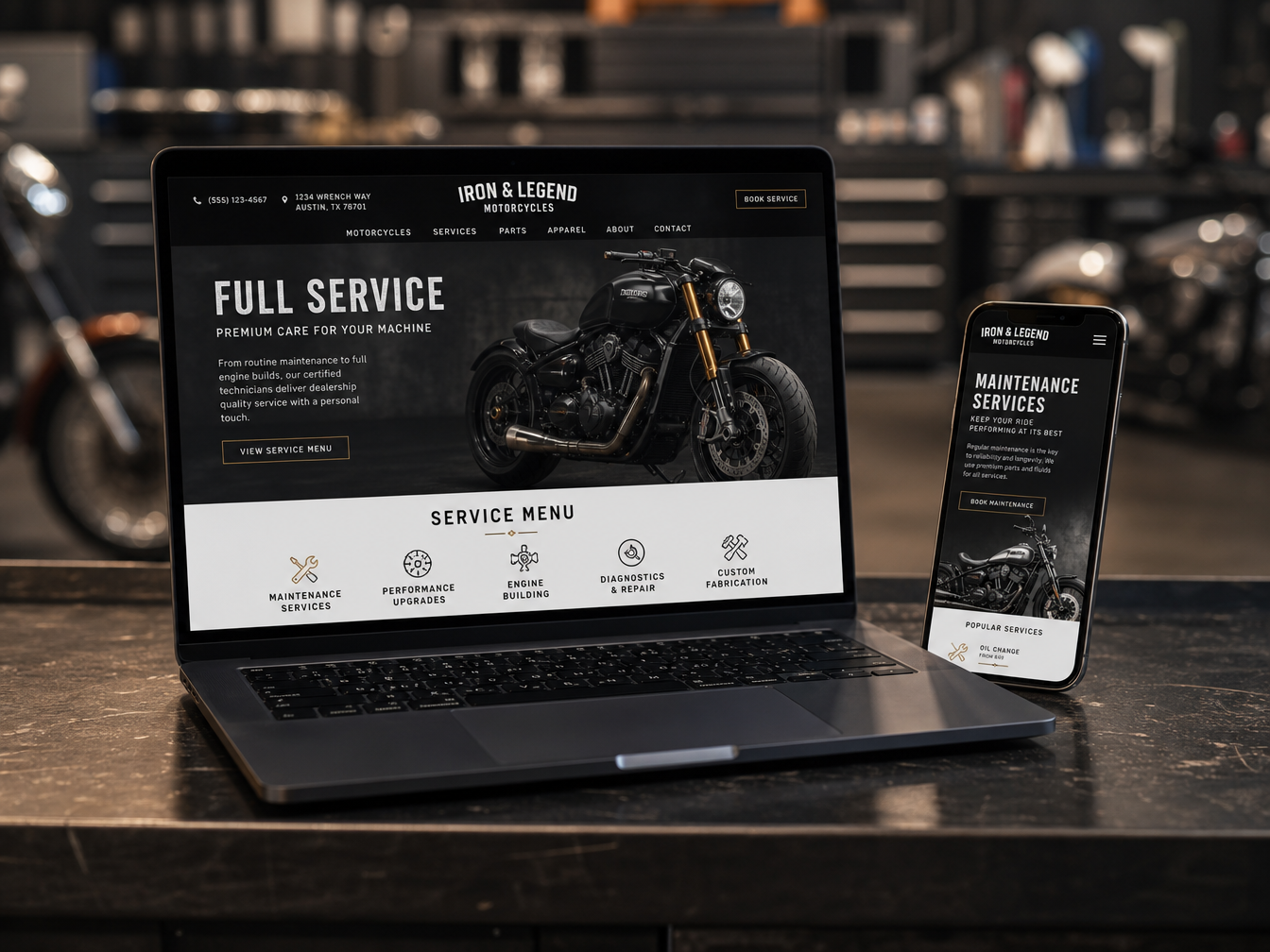
Motorcycle buyers don't search the way car buyers search. They don't type "motorcycle shop near me" and call whoever shows up. They search for the specific service they need on the specific platform they ride. That search behavior is a filter — only shops that appear for platform-specific queries get considered. Shops that rank for generic terms get ignored.
The Osiris SEO architecture is built around the searches your actual buyers run. Not broad automotive terms. Not generic "motorcycle repair" queries. The platform and service combinations that indicate a buyer who is ready to book.
Platform-Specific Page Architecture
Individual indexed pages per platform category — Harley touring, Softail, Indian, sport bike marques — each targeting the search pattern that platform's buyers actually use. One page per platform captures the buyer who typed the machine they ride.
Google Business Profile as a Ranking Asset
Your GBP is not a contact card. Managed correctly, it's the strongest local ranking signal you have. We optimize every field, build citation authority, and activate GBP posting as a content channel — not a checkbox.
Community Authority Signals
Motorcycle shops exist inside communities — rider clubs, marque-specific groups, track organizations. Authority signals from those communities carry more weight with Google than generic automotive citations. We build into the communities your buyers already trust.
Build Content That Ranks and Converts
Build documentation — photo essays, spec notes, service timelines — functions as both an authority signal to Google and a trust signal to every buyer who reaches your site during their research phase. The content that proves your work is the same content that ranks for it.
Territorial exclusivity means your SEO investment compounds without ceiling. When we build the anchor infrastructure for a motorcycle shop in your market, we don't build the same infrastructure for your competitor. Every improvement to your ranking position is permanent relative to your market. The gap between you and the next shop grows with every month the anchor is active.
The Osiris Auto Guild: One Vetted Motorcycle Shop Per Vertical Per City
When your shop joins the Osiris network, you receive a dedicated profile on osirisautoguild.com — the Osiris-owned specialty automotive directory. One vetted shop per specialty per city. That is the consumer-facing function. The SEO function is what most shops never think about until they see it working.
A Real Backlink From a Real Directory
Your Guild profile links to your Osiris-built website. That is a backlink from an external domain publishing verified, detailed profiles of the most credible specialty automotive shops in your city. Not a citation aggregator. Not a paid listing. A curated directory written by the company that also built and manages your infrastructure.
Credibility Through the Network
The Guild features one shop per vertical. The motorcycle anchor in your Dallas territory shares a domain with the 4x4 anchor, the diesel anchor, the muscle shop — every vetted specialist in the network, held to the same standard. Being listed alongside those operations is a third-party signal no amount of self-promotion can replicate.
The DFW Guild page is live and active. My Detail Guys — a founding network node, 17 years in business, 510+ Google reviews — has a dedicated external profile documenting every infrastructure change Osiris made and every result those changes produced. That profile is written by Osiris, from an external perspective, and links back to the shop. That is what Guild membership looks like at full execution.
The Guild is the consumer-facing face of the network. The network node program is how adjacent service shops plug in, and how we manage every client's infrastructure is what keeps the whole system performing.
How to Increase Revenue for a Motorcycle Shop: Close the Leads You're Already Generating
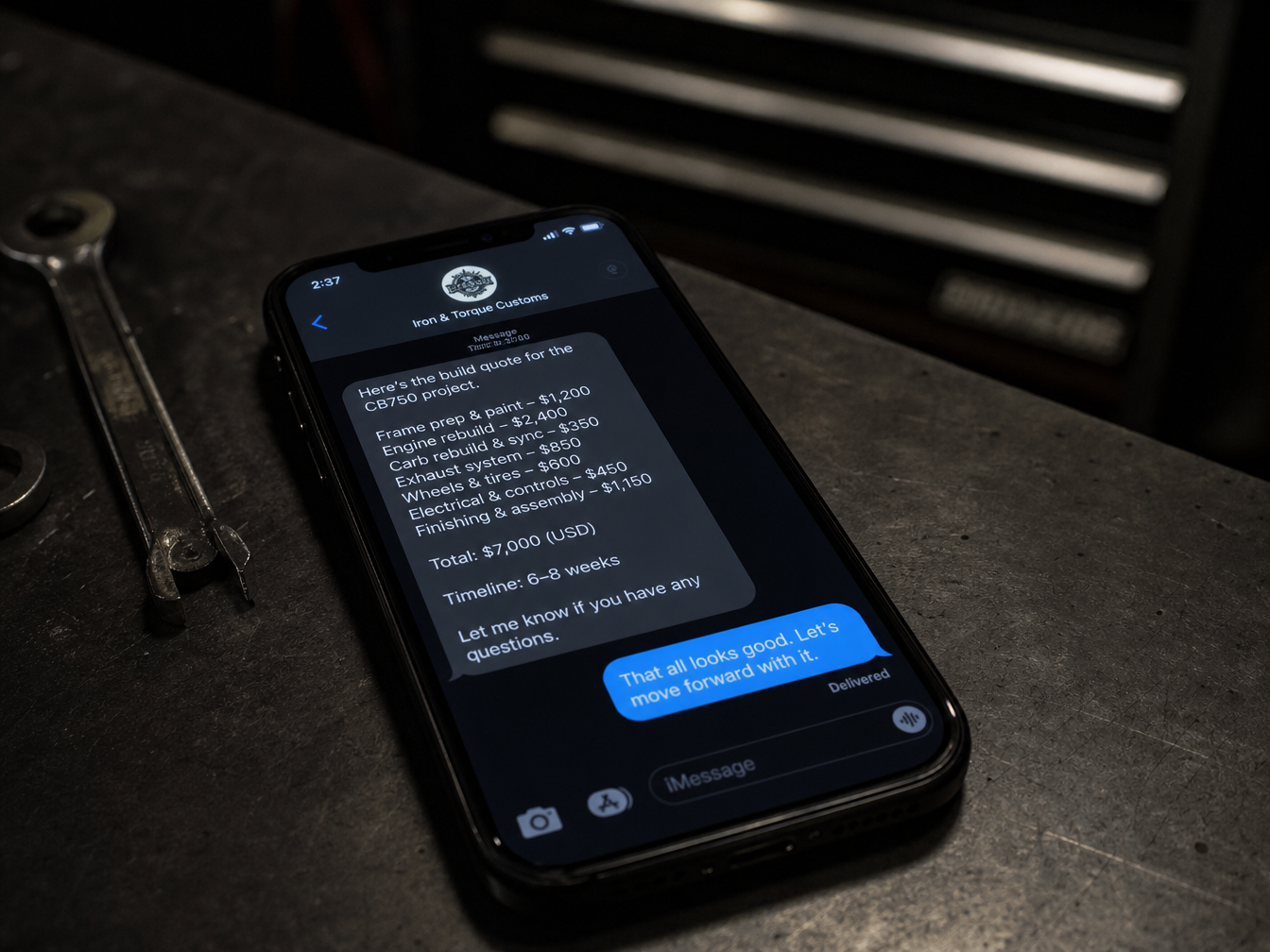
Motorcycle buyers — especially in the performance and custom segments — are high-ticket and deliberate. A custom build quote, a suspension overhaul package, a full stage tune: these are not impulse purchases. The buyer is thinking about it. And while he's thinking, your shop goes quiet.
The gap isn't the buyer's timeline. It's the absence of a follow-up system that stays in contact without requiring a human to manually chase every lead. Most shops lose 30–40% of closable revenue not from losing to a competitor, but from simply not following up.
The Missed Call
A rider calls about a custom build. You're under a bike. He hangs up after six rings. He's gone unless an automated text fires in 30 seconds. Missed call text-back captures the lead before he reaches the next result in his search. Most shops don't have it. The ones that do close the leads the others lose.
The Dead Quote
You quoted a full suspension overhaul and stage tune. Great conversation. The rider went quiet for two weeks. Without an automated 30-day resurrection sequence, that quote is dead. With it, 10–15% of quotes that go cold come back. That's pure recovered revenue from work the shop had already done.
The After-Hours Inquiry
He spent Sunday evening planning next season's build. Submitted a contact form at 10:14 PM. Your shop opened Monday with no response system. His second choice replied at 10:16 PM via automated text. 56% of new inquiries arrive after business hours. The shops with infrastructure capture them. The shops without lose them.
How Osiris Builds Motorcycle Shop Marketing Infrastructure: Market by Market, Vertical by Vertical
Every company that has tried to build something like this has made the same mistake: spread to as many cities as they can reach, sign one or two shops per city, and discover that a half-built network produces nothing for anybody. Referrals require volume. Volume requires a complete network behind it. A directory spread thin across twenty cities is just a list of shops who paid for a promise.
Osiris is building market by market, vertical by vertical. Dallas is a core market in the Texas Triangle build — the complete regional stack that covers Houston, Dallas, San Antonio, and Austin before expanding to any other state. One city doesn't unlock until it's complete. Complete means every major vertical has an anchor. Every anchor has the full infrastructure stack. Every node is connected to a referral network that has volume behind it. That is the only version of this that works.
The motorcycle vertical in every Osiris market gets two anchors: one for the cruiser and touring segment, one for the sport bike and performance segment. Both are available now. Neither requires waiting for the network to mature to produce results — the motorcycle shop marketing infrastructure and CRM automation produce value from day one, independent of network size.
Motorcycle Shop Marketing: Common Questions from Shop Owners
Most agencies were built for general service businesses or for OEM dealerships with manufacturer co-op budgets. Osiris builds exclusively for independent specialty shops. The SEO architecture targets the searches your buyers actually run. The website copy speaks the language of the vertical — stage tunes, platform-specific service work, custom builds. The CRM is calibrated for high-ticket, relationship-driven sales cycles, not repair order volume. And we operate on territorial exclusivity: one anchor per vertical per market. Your investment doesn't fund a competitor's infrastructure.
Revenue growth in the motorcycle vertical has two drivers: capturing buyers who are actively searching for a shop in your market, and recovering the revenue already in your pipeline that dies from lack of follow-up. The Osiris stack addresses both. SEO infrastructure captures first-contact searches from buyers who have no existing shop relationship. CRM automation recovers the quotes, missed calls, and after-hours inquiries your shop is already generating but not closing.
The highest-value customer acquisition channel in this vertical isn't advertising — it's organic search. The rider who just moved to the Dallas–Fort Worth metro and searches "Harley performance shop Dallas" or "sport bike suspension specialist near me" is pre-qualified, high-intent, and ready to commit to a shop relationship. A single acquisition like that generates lifetime value that advertising would never justify at cost. The infrastructure we build puts your shop in that search position.
The core SEO architecture for motorcycle shops is platform-specific service pages indexed around the searches buyers actually run. "Harley Road Glide stage 3 tune Dallas." "Ducati Panigale ECU flash near me." "CBR1000RR track prep Dallas." Paired with a Google Business Profile treated as a ranking asset and authority signals from the rider communities your buyers already trust. That architecture competes in search positions no dealership service department is built to occupy — and no generic automotive agency knows how to build.
Yes. A shop that works across both segments can pursue both territorial anchor slots — cruiser and sport bike are separate verticals with separate territory availability. The website architecture can reflect both segments with distinct platform and service pages for each. The CRM operates identically regardless of vertical mix. If your shop works on both Harleys and liter bikes, the infrastructure is built to capture both buyer types with copy and page architecture calibrated to each.
The highest-margin work in this vertical — full custom builds, complete tune packages, premium suspension overhauls — requires trust before the buyer commits. Trust is built through authority signals: a site that communicates competence, a build gallery that shows the quality of your work, and a follow-up system that demonstrates you're serious. Shops that project authority charge more and close more. The infrastructure is the lever that builds that authority in your market.
One anchor per vertical per territory. Once you sign, no competing motorcycle shop in your market gets the same search infrastructure for the same vertical. Every improvement to your ranking position compounds without ceiling — we're not simultaneously building authority for your competitor. CRM infrastructure is not territory-exclusive: any shop in any market can access the full operational automation stack regardless of territory status. But the SEO anchor — the website, the managed search presence, the competitive lock — goes to one shop per vertical per market.
Dallas is an active market in the Osiris Texas Triangle build — the first complete region Osiris fills before expanding to any other state. Motorcycle anchor slots are open in Dallas for both the cruiser and sport bike verticals. Osiris operates on territorial exclusivity: one anchor per specialty per metro territory. The cruiser slot and the sport bike slot in Dallas are separate — a multi-line shop can hold one or pursue both depending on availability. Once a slot fills, it stays filled.
Motorcycle Shop Marketing Territory: One Anchor Per Vertical Per Market
The motorcycle vertical operates on territorial exclusivity. One cruiser anchor per territory. One sport bike anchor per territory. Once those positions fill, they fill — no competing shop in your market gets the same search infrastructure for the same vertical.
CRM infrastructure is not territory-exclusive. Any shop in any market can access the full operational stack regardless of territory status. But the SEO anchor — the website, the managed search presence, the local competitive lock — goes to one shop.
The anchor position in Dallas may be open. It may not be. The only way to know is to check.
Motorcycle Shop Marketing Across the Texas Triangle
Osiris builds motorcycle shop marketing infrastructure for independent shops in Dallas and across the Texas Triangle. The Dallas–Fort Worth metro is a core market in the complete regional build covering Houston, Dallas, San Antonio, and Austin before expansion to any other state. If your market is listed, territory may be available. Contact us to check your slot.