
Marketing Built for
Classic Car Shops.
Not adapted from a general automotive template. Designed from the ground up for the shop doing frame-off restorations, restomod builds, and complete engine rebuilds — and wants more of that work, not less.
The Builds You're Built For
Aren't Finding You.
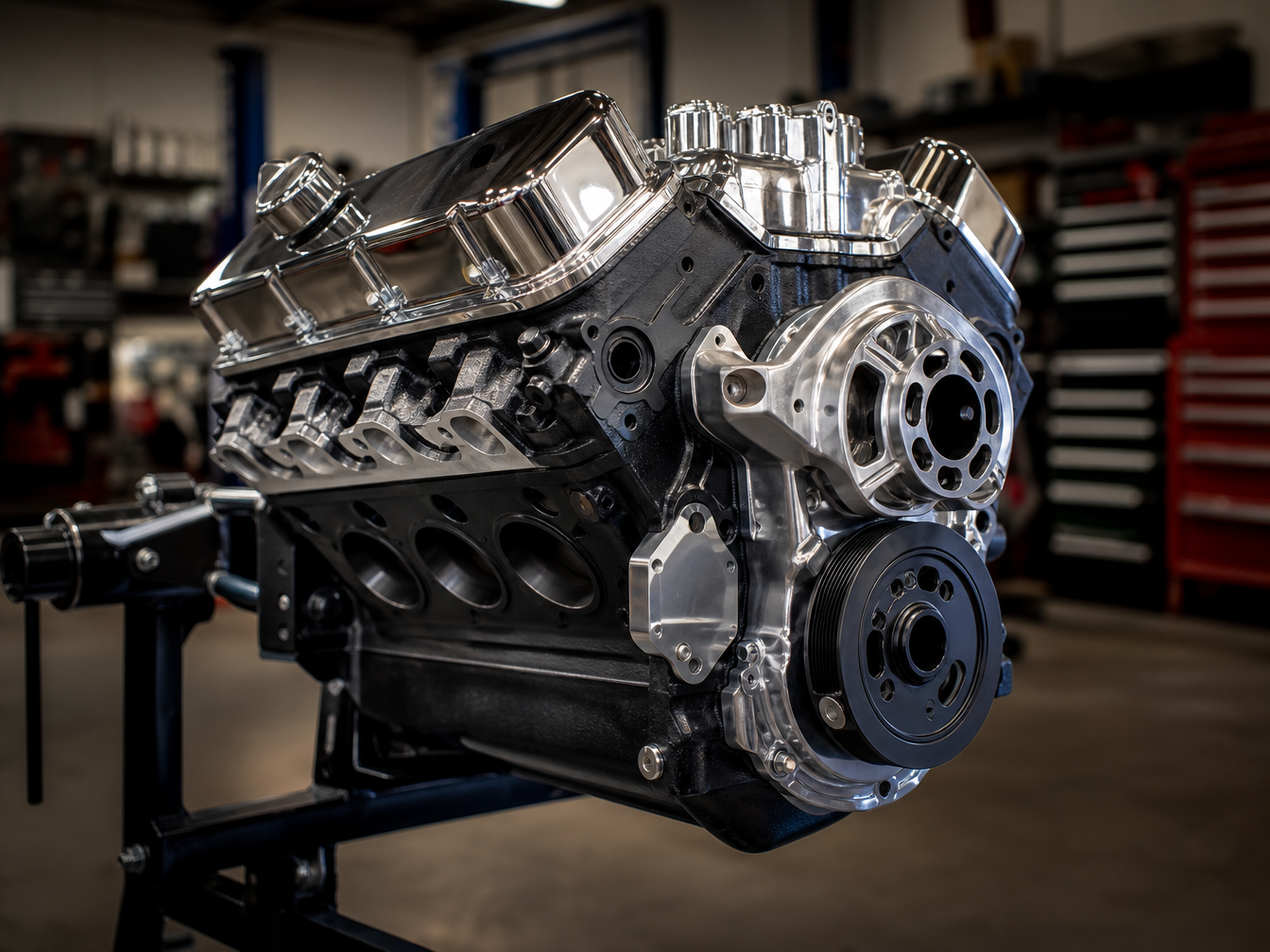
Your shop lives in a category that most automotive businesses can't touch. A frame-off restoration on a 1969 Camaro. A numbers-matching Mustang fastback with a crate motor hidden behind factory-correct sheetmetal. A first-gen Chevelle that took fourteen months and will be on the show floor next year. You know what that work requires. Your customers know. The buyer who is finally ready to trust someone with a car that has been in their family for thirty years doesn't know you exist.
The generalist digital marketing agency that built your current site doesn't know the difference between a restomod and a resto-rod. They cannot write a 1957 Chevy Bel Air project page that speaks to a buyer who has owned the car since their father parked it. They built you something that looks like every other auto shop in your city — and then wonder why the leads coming in are brake jobs and alignments.
Meanwhile, a buyer searching "1969 Camaro restoration shop [your city]" tonight is a $25,000–$75,000 job ready to happen. That buyer has done research. They know what correct panel gaps look like. They know the right questions to ask. And they will give the job to the shop whose digital presence tells them — without a pitch — that the work they're looking at is the work you do. 78% of buyers purchase from the first business that responds. The question is whether they find you or the shop across town with half your skill and twice your online presence.
Osiris works exclusively in specialty automotive. The system exists because craft shops in every vertical deserved better infrastructure than any generalist agency was willing to build for them. Classic car restoration has its own buyer psychology, its own search behavior, its own vocabulary. Digital marketing that doesn't know that vocabulary cannot get the job.
The complete breakdown of what that exclusivity position includes — territory lock, full-stack infrastructure, quarterly war room sessions, and the full niche architecture for this vertical — is at The Anchor Position.
The Classic Car Market Grew.
The Marketing Never Caught Up.
Look at what collector vehicle values have done over the past decade. The Hagerty Vehicle Rating index tracking first-generation muscle cars. Barrett-Jackson and Mecum combined record auction results, year after year. Collector car values for pre-1985 vehicles outpacing virtually every traditional asset class. The market for early Camaros, Mustang fastbacks, classic trucks, and original muscle cars is at an all-time high — and the demand for shops that can do the work correctly has followed.
Here is what that did not produce: any corresponding upgrade in how restoration shops present themselves online. The shops doing the highest-quality work in every metro in this country are still operating on word of mouth, a website that hasn't been touched in years, and a Facebook page that updates when the owner finds ten minutes. The buyer with $50,000 to spend on a frame-off restoration is doing serious research — and finding a landscape of shops that are functionally indistinguishable online.
The buyer about to entrust someone with a car that has been in their family for two generations opens four shop websites and makes a credibility decision in twelve seconds. Most of the time, that decision is not about who does the best work. It is about who built the presence that signals they do.
Mechanical, Electrical, and Plumbing contracting is the closest commercial analog to specialty automotive. High-ticket projects. Expertise-driven. Strong referral culture. Work that requires genuine craft and carries serious liability if done wrong. And it already went through this arc.
Ten years ago, every major market had a dozen MEP firms operating the same way — good work, word of mouth, a basic website, chamber of commerce relationships. The firms that moved first on serious digital infrastructure became the dominant players in their territory. Not slightly ahead. Institutionally ahead. The firm with 40 trucks rolling in your city today built that position on decisions that looked optional in 2013. The firms that didn't make those decisions are still running a small crew. Some of them do exceptional work. They are permanently capped because the search territory is owned — and it closed while they were billing jobs.
The specialty automotive market in every major U.S. metro is at that inflection point now. The shops that will own their markets for the next decade are making the infrastructure decision this year — not in two years when the pattern is obvious. By the time it's obvious, the window looks like MEP contracting today: closed.
Every pin on these maps is a geographic point across a major metro. The number on each pin is where a business ranks on Google Maps when someone at that location searches that keyword. Green means top three. The further into red, the more buried. A "10+" means the business does not appear in the top ten results from that location at all.


A Trust License,
Not a Brochure Site.
The classic car buyer is not a casual researcher. They have owned the vehicle for years — sometimes decades. They have a vision for the outcome. They have done enough homework to immediately distinguish a shop that understands their car from one that doesn't. What they need before they call anyone is evidence that your shop is the kind of place that will treat their car the way they have treated it.
Osiris builds classic car restoration websites in three tiers and every page earns its spot. Service pages targeting the searches your buyer actually performs. Vehicle-platform pages that speak directly to the Camaro owner, the Mustang owner, the classic truck owner — in the specific language of their generation and build intent. A build process page that converts a hesitant prospect into a confident caller before you say a word. Each site is pre-built in a dedicated design system and rebranded with your name, number, and story in under two hours. Live in five days from signature.
- Service pages — frame-off, restomod, bodywork & paint, engine rebuilds
- Chevrolet Camaro platform page
- Ford Mustang platform page
- Build process page — assessment to delivery
- Gallery and contact
- On-page SEO from day one
- All Foundation pages
- First-gen / second-gen Camaro split
- Classic Truck platform — C10, F-100, Stepside
- Restomod vs. Restoration philosophy page
- Chassis, suspension, and interior pages
- 2 build showcase deep-dives
- 2 suburb location pages
- All Growth pages
- Corvette, Chevelle, GTO, El Camino platforms
- Mopar depth — Charger, Challenger, 'Cuda, Road Runner
- Ford depth — Torino, Galaxie, Thunderbird
- Brand partner pages — Dakota Digital, Wilwood, Magnaflow, Vintage Air
- Vehicle + service deep dives
- Classic car documentation and appraisal reference page
There is no large upfront website build invoice. The site is part of the monthly infrastructure package — Osiris builds it, owns it, and maintains it as part of the ongoing engagement. You operate with full access from day one. That arrangement is deliberate: this infrastructure functions as a continuous operating system, not a one-time install. The performance accountability that runs in both directions only works because the relationship is ongoing.
If you are looking for a website to own outright and run independently, we are not the right fit — and we would rather tell you that now. If you are looking for the infrastructure that makes your shop the permanent market leader in your territory, that is the conversation we are built to have.
Search Architecture
for the Classic Car Buyer.
The classic car buyer doesn't search "auto shop near me." They search for the car they own and the work they want done. These are not high-volume generalist queries — they are high-intent searches where the buyer has already decided to do the project and is now deciding who to trust with it. That is where Osiris builds your presence.
Vehicle-specific pages for every platform your shop works on. Service pages built around the project types your best buyers actually bring in. Vehicle-plus-service deep dives targeting the highest-intent queries in the vertical — a page built around "1969 Camaro frame-off restoration [your city]" doesn't attract browsers. It attracts a buyer with $30,000–$60,000 to spend who has already committed to the project and is vetting shops.
Running on top of the page architecture, the AI SEO Pixel crawls the site continuously, grades it against real search data, and queues optimizations. Nothing goes live without approval. Google Business Profile is managed and posted to weekly. Two new pages go live every month — each targeting a specific search your shop has not yet captured.
Osiris monitors every direct competitor in your territory. What they publish, what keywords they target, what pages they build. The monthly report is not a performance summary. It is a competitive map of your market, updated every month, with the specific moves your competitors made and the response already planned.
Auto Restoration Shop Marketing Built Around the Buyer, Not the Brand
Auto restoration buyers are not impulse shoppers. They're researching for months before they pick up a phone — comparing portfolios, reading reviews about how shops handle communication on long-build projects, and searching specific platform terms like "frame-off restoration near me" or "classic car restoration Houston." The search infrastructure Osiris builds for classic car shops is designed around that buyer journey, not around traffic metrics.
One Page on This Domain Is Worth More Than Any Ad You've Ever Run
When your shop joins the Osiris network, you get a dedicated profile on osirisautoguild.com — the Osiris-owned specialty automotive directory. One vetted shop per specialty per city. That is the consumer-facing function. The infrastructure function is what most shops never think about until they see it working.
The DFW Guild page is live and active. My Detail Guys — a founding network node, 17 years in business, 510+ Google reviews — has a dedicated external profile on osirisautoguild.com documenting every infrastructure change Osiris made and every result those changes produced. That profile is written by Osiris, from an external perspective, and links back to the shop. That is what Guild membership looks like at full execution.
The Guild is the consumer-facing face of the network. The network node program is how adjacent service shops plug into it, and how we manage every client's infrastructure is what keeps the whole system performing.
The Revenue You're Already
Generating — and Losing.
The classic car buyer is a long-cycle decision-maker. They have been thinking about this project for years — sometimes decades. When they finally call, they are ready. The shop that responds first, communicates clearly, and holds the relationship through a project that may run six to twelve months wins not just the job but everything that comes with it. These buyers own multiple vehicles. They know other collectors. The lifetime value of a single restoration customer, handled correctly, can exceed $100,000 in direct and referred revenue.
The Osiris CRM closes the gaps that cost you those relationships. Missed-call text-back fires within 60 seconds of a hung-up call, recovering the lead before it reaches the next Google result. After-hours handling captures contact information and queues the callback. Post-quote follow-up runs automatically on a structured cadence — because a $40,000 restoration quote that goes quiet for a week does not lose on price. It loses on silence.
The average restoration project at a classic car shop runs $15,000 to $75,000 depending on scope and platform. The average collector owns more than one vehicle. A single customer who returns for a second build and refers two people from their car club network represents lifetime value that makes every missed call an expensive decision. The CRM does not create demand. It stops the demand your shop is already generating from leaking to a shop that answers faster.
Big Networks Fail When They Try to Be Everywhere at Once. We're Not Doing That.
Every company that has tried to build something like this has made the same mistake: spread to as many cities as they can reach, sign one or two shops per city, and discover that a half-built network produces nothing for anybody. Referrals require volume. Volume requires a complete network behind it. A directory spread thin across twenty cities is just a list of shops who paid for a promise.
Osiris operates on a different rule: one complete region before touching the next one. The Texas Triangle is the first region. Dallas–Fort Worth, Houston, San Antonio, Austin — treated as one economic unit, because that is already how the market behaves. Customers, shops, and specialty automotive commerce move freely between those four cities in ways that don't respect city lines. The Osiris network formalizes what was already happening.
And the execution reality: every DFW prospect can be called in a week. While those calls are working through the pipeline, Houston outreach begins. While Houston is in motion, San Antonio and Austin follow. The cities are worked in parallel because the outreach cadence allows it — and because artificial sequencing within a region that already has economic ties serves no one.
The commitment: every anchor vertical and universal node category across all four Texas Triangle cities — 100% filled — before Osiris opens in another state. Not majority-filled. Not mostly done. Complete. After the Triangle is proved across multiple cities with different competitive conditions: other states.
This is the same territory and anchor model laid out in how Osiris works and the full vision behind the build — and the position it describes is the one explained in who the anchor is for.
- Treating the Texas Triangle as one region — DFW, Houston, San Antonio, Austin
- Working all four cities in parallel as the call cadence allows
- 100% anchor and node fill across the Triangle before any other state
- Building founding node proof in DFW before the anchor network opens
- Slots that fill stay filled — the design intent is a permanent partner, not a revolving door
- Opening another state before the Triangle is complete
- Opening city Guild pages before the anchor pipeline backs them
- Signing anchor clients we haven't vetted
- Treating a few clients in each city as a network — it isn't one
The proof is already live. Two founding network nodes — My Detail Guys and My Upholstery Guys, Dallas–Fort Worth, inside the Osiris network since 2025 — produced 48% gross revenue growth, doubled full-time headcount, and 73 new Google reviews in 8 months. That happened before the first anchor vertical ever signed in DFW. Infrastructure alone did that. The anchor network and referral layer activate on top of that foundation.
That infrastructure was built by an operator who came up in the specialty trades, not in marketing — the Osiris story.
What Shop Owners Ask
Before the First Call.
Classic car restoration is one of the most misunderstood verticals in automotive. A generalist agency cannot write a 1969 Camaro SS platform page that speaks to a buyer who has owned that car for thirty years and is finally ready to give it to someone. They cannot distinguish a numbers-matching restoration from a restomod in copy — and the buyer who knows the difference will close the tab before they reach the phone number.
Osiris works exclusively in specialty automotive. Vehicle-platform pages built around the specific makes, models, and generations your buyers own. Service pages built around the project types they search for. Build showcase content that converts a hesitant prospect into a confident caller before you ever pick up the phone. None of that comes from adapting a template. It comes from being in the vertical.
The model is also different. Territorial exclusivity means one anchor client per classic car / restoration vertical per metro territory. When your slot is filled, no competing shop in your market gets the same infrastructure. And the website is part of an ongoing engagement — Osiris owns it, maintains it, and is accountable for its performance. That accountability doesn't exist when an agency invoices for a site and moves on.
Revenue growth in a restoration shop comes from three places: capturing more of the demand already coming in, attracting higher-ticket project types, and building a presence that compresses the referral cycle.
The first is the fastest. Classic car buyers are long-cycle decision-makers — but when they call, they are ready. Missing that call doesn't cost a transaction. It costs a multi-year relationship worth tens of thousands of dollars in repeat and referral revenue. Missed-call text-back, after-hours lead capture, and post-quote follow-up automation recover the revenue already coming in before it reaches a competitor.
The second is about job profile. Shops that build their search presence around premium project types attract a different buyer. The searcher looking for "1969 Camaro SS frame-off restoration" has a fundamentally different budget than the one searching "classic car shop near me."
The third compounds. A dominant local search presence converts referrals faster because the collector who was referred already found the shop online before they made the call. Referral plus search authority close at a different rate than either alone.
The biggest profit opportunities in a classic car shop are not in raising your labor rate. They are in closing the gap between inquiry and booked job — and shifting the project mix toward the work that produces the highest-margin outcome.
The inquiry gap is behavioral. Long-cycle buyers who get no response in the first few hours after reaching out move on. They are not lost on price. They are lost on silence. Missed-call text-back, after-hours lead capture, and structured follow-up sequences hold the relationship through the buyer's research period and recover jobs that would otherwise disappear to whoever responded fastest.
The job mix shift is slower but more durable. A restoration shop that builds the page architecture to rank for premium project types — frame-off restoration, numbers-matching work, complete restomod builds — attracts a systematically higher-value buyer mix over time. The buyer whose search led them to a 1969 Camaro SS platform page is not comparing quotes with the cheapest shop in town.
The classic car buyer searches before they call, and they search specifically. "1969 Camaro frame-off restoration shop near me." "Classic truck restoration C10 [city]." "Restomod shop near me." These are buyers with a specific vehicle, a specific vision, and money committed to the right shop.
Getting more of those customers starts with being visible when those searches happen. Vehicle-platform pages for every major classic you work on. Service pages built around the project types your best buyers bring in. A Google Business Profile managed, posted to weekly, and actively pulling reviews — because the map pack is where most local search clicks go before the organic results below.
Speed matters as much as visibility. A restoration buyer who calls and hears voicemail does not wait for a callback. They go to the next result. 78% of buyers purchase from the first business that responds. Missed-call text-back and after-hours lead capture turn your search visibility into a live relationship before the buyer reaches a competitor.
The ceiling most classic car restoration shops hit comes from the same structural decision: word of mouth as the primary growth engine. Referrals in the collector community are powerful — but they are bounded by the network of people who happen to know someone who knows you. A buyer spending $50,000 on a frame-off restoration and finding you through search tonight has never met anyone who knows your shop. That buyer is invisible to your referral network and fully visible to your search presence — or they aren't.
The shops that grow past the ceiling invest in infrastructure before the return is obvious. They build vehicle-platform pages before anyone is ranking for them. They manage their Google Business Profile before the map pack becomes critical. They implement a CRM before they've lost enough inquiries to quantify what's leaking.
The compounding dynamic is the same as every other craft-based business that went through this arc. Search authority is slow to build and slow to lose. The shop that establishes position before the market gets contested holds it. The shop that waits until the pattern is obvious finds the window closed.
SEO for a classic car shop requires vehicle-platform pages for every major category your shop works on — first-generation Camaro, Mustang fastback and convertible, classic trucks (C10, F-100, Stepside), Corvette, Mopar muscle. Each page speaks to that buyer in the language they actually search.
Service pages form the second layer — frame-off restoration, restomod builds, bodywork and paint, engine rebuilds, chassis and suspension, interior restoration. Each targets the specific queries buyers perform when searching for that type of work.
The highest-intent targets are vehicle-plus-service combinations. A page built around "1969 Camaro SS frame-off restoration [city]" doesn't attract browsers — it attracts a buyer who has owned the car for years and has finally decided to trust a shop with it, with the budget to do it right. On top of the page architecture, Google Business Profile is the local SEO pillar that determines map pack position. Consistent management, weekly posting, and active review nurturing move the shop into the positions where the majority of local search clicks go before the organic results below.
One Shop Per Market.
One Territory Per Vertical.
Osiris operates on territorial exclusivity. One anchor client per classic car / restoration vertical per metro territory. When a slot is filled, it stays filled. No competing restoration shops receive the same infrastructure in the same market. Exclusivity runs both directions — the anchor holds the territory, Osiris holds the standard, and both sides are accountable to it.
If your market has an open anchor slot, the conversation starts now.
If your market is filled, the CRM is available immediately — there is no territorial restriction on the operations layer. The waitlist governs the SEO anchor position, not the automation infrastructure. Start recovering the leads your shop is already losing while the anchor slot opens. When it does, you are already in the system and already ahead.
See If Your Territory Is Available →Check Territory Availability for Your Market
Osiris takes one anchor client per classic car and restoration vertical per metro territory. If your market slot is open, this form starts the conversation. If it is filled, you can still access the CRM infrastructure — the waitlist governs the SEO anchor position, not the operations layer.
Fill out the form to confirm your territory status. No sales pitch. No pricing on the call. First conversation is a territory check and a fit call.
Classic car restoration buyers research for months. The shop that builds search infrastructure before the market is contested holds the position when the buyers arrive. That window closes once the anchor slot is filled.
Auto Restoration Shop Marketing — Markets We Serve
One anchor per vertical per metro. Click your market to see how the classic car and auto restoration shop marketing infrastructure is built for your specific territory — search footprint, competitive map, and what the build looks like for your city.
Texas Triangle — Active Markets Expansion Markets