
UTV Shop Marketing for the Buyer Searching for Build Work
Search 'Can-Am build shop Tampa' or 'UTV lift shop Tampa' and the page is dealer service departments, a Yelp directory, and a national parts chain. The shop doing real snorkel, lift, and long travel work for Gulf Coast riders doesn't show. The demand runs all year and the presence to capture it was never built.
The first organic result for "UTV lift shop Phoenix" is a five-page website that looks like it was built on a free platform ten years ago. The next four results are Yelp, a Facebook directory search, and a national chain parts store. The actual specialist shop in that market — the one running long travel kits on RZRs and building cage systems for the desert — doesn't rank. Not because the work isn't there. Because nobody built its presence.
Every digital marketing company that knows the powersports industry was built for dealers. Inventory showcase. New unit promotions. Finance call-to-actions. That is not your buyer and it is not your business.
Your buyer already bought the machine. They came to you because the dealer cannot do what you do. The digital marketing infrastructure built for dealers does nothing for the shop that builds the rigs after the sale.
The searches your buyers actually use — platform-specific, service-specific, city-specific — have no meaningful organic competition in most markets. A page built around Polaris RZR suspension shops in your metro isn't competing against a mature field. It is walking into an empty room. Osiris puts you in that room before anyone else does.
ATV Dealer Marketing and Side-by-Side Shop Infrastructure Built Around the Build
A buyer pricing a $12,000 long travel build or a full Can-Am cage and audio package is not picking up the phone based on a five-page brochure site. They are evaluating your shop the same way they evaluate everything else — by what they see before they ever talk to you. In a vertical where most shops have no real web presence, and the ones that do have something assembled on a free platform, your website is not competing with other shops. It is competing with directory listings. That is a low bar. Osiris builds past it entirely.
Platform-specific pages speak directly to the Can-Am owner, the Polaris owner, the Yamaha YXZ owner, the Honda Talon owner. Service pages target what buyers actually search: long travel suspension, portal gear installs, cage fabrication, audio and electrical builds, wheels and tires. The builds your shop does best get their own pages, their own content, their own search architecture — not a bullet point in a services list.
Each site is pre-built in a dedicated powersports design system and rebranded with your name, number, location, and story in under two hours. Live in five days from signature.
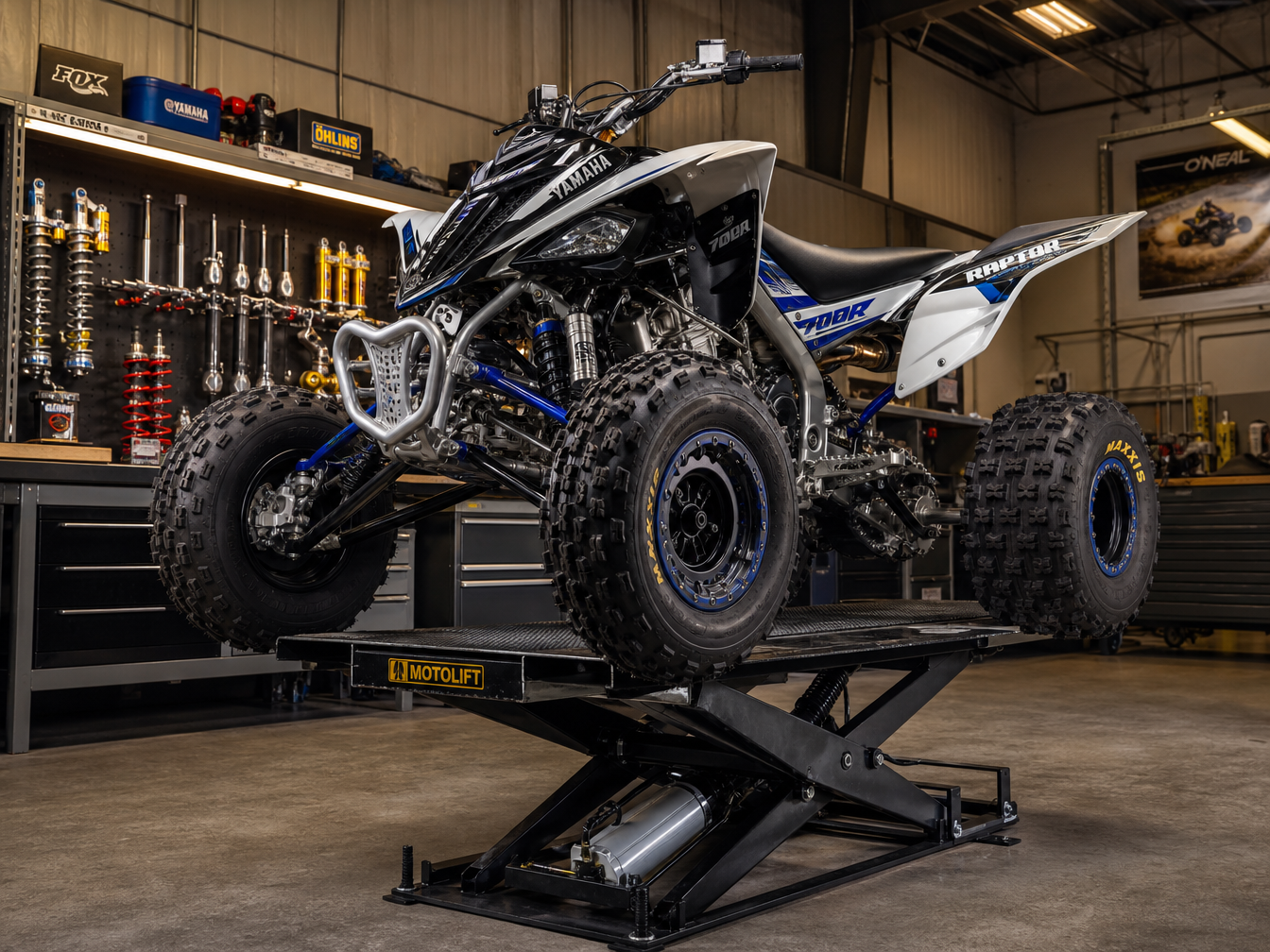
The website is not sold separately. It is the foundation of the Osiris infrastructure package, rented as part of the monthly engagement. Osiris owns the asset. You operate with full access. Accountability runs in both directions — Osiris is as accountable to the performance of what it builds as you are to the work you put on the lift table.
- Core service pages
- Platform pages (2)
- Build showcase (1)
- Contact + intake forms
- Full service depth
- Platform pages (4)
- Build showcases (2)
- Location pages
- Blog infrastructure
- Platform + service deep dives
- All major platforms
- Brand partner pages
- Build showcase library
- Multi-location
One Page on This Domain Is Worth More Than Any Ad You've Ever Run
When your shop joins the Osiris network, you get a dedicated profile on osirisautoguild.com — the Osiris-owned specialty automotive directory. One vetted shop per specialty per city. That is the consumer-facing function. The infrastructure function is what most shops never think about until they see it working.
The DFW Guild page is live and active. My Detail Guys — a founding network node, 17 years in business, 510+ Google reviews — has a dedicated external profile on osirisautoguild.com documenting every infrastructure change Osiris made and every result those changes produced. That profile is written by Osiris, from an external perspective, and links back to the shop. That is what Guild membership looks like at full execution.
The Guild is the consumer-facing face of the network. The network node program is how adjacent service shops plug into it, and how we manage every client's infrastructure is what keeps the whole system performing.
Powersports Lead Generation: The Revenue Your Shop Is Already Generating and Losing
The jobs your shop produces are not oil changes. A long travel suspension on an RZR is an $8,000–$15,000 ticket. A full Can-Am cage and electrical build runs higher. When you lose a call, you are not losing a transaction. You are losing a relationship.
62% of inbound calls to small service businesses go unanswered during business hours — not because shops don't care, but because the tech is on the lift and the owner is on the phone with a supplier. The buyer who calls at 2PM on Wednesday and reaches no one calls the next shop on the list. 85% of callers who can't reach a business on the first attempt never call back. In a vertical where qualified buyers are not abundant and the jobs are large, that is not an industry statistic. That is real money leaving the building.
After hours, the window widens further. 56% of new leads arrive outside business hours. The serious UTV buyer watching build content at 10PM on a Saturday who finds your shop, sends an inquiry, and hears nothing until Monday morning has already moved on. The shop that responded — even by text — got the appointment.
Big Networks Fail When They Try to Be Everywhere at Once. We're Not Doing That.
Every company that has tried to build something like this has made the same mistake: spread to as many cities as they can reach, sign one or two shops per city, and discover that a half-built network produces nothing for anybody. Referrals require volume. Volume requires a complete network behind it. A directory spread thin across twenty cities is just a list of shops who paid for a promise.
Osiris operates on a different rule: one complete region before touching the next one. The Texas Triangle is the first region. Dallas–Fort Worth, Houston, San Antonio, Austin — treated as one economic unit, because that is already how the market behaves. Customers, shops, and specialty automotive commerce move freely between those four cities in ways that don't respect city lines. The Osiris network formalizes what was already happening.
And the execution reality: every DFW prospect can be called in a week. While those calls are working through the pipeline, Houston outreach begins. While Houston is in motion, San Antonio and Austin follow. The cities are worked in parallel because the outreach cadence allows it — and because artificial sequencing within a region that already has economic ties serves no one.
The commitment: every anchor vertical and universal node category across all four Texas Triangle cities — 100% filled — before Osiris opens in another state. Not majority-filled. Not mostly done. Complete. After the Triangle is proved across multiple cities with different competitive conditions: other states.
This is the same territory and anchor model laid out in how Osiris works and the full vision behind the build — and the position it describes is the one explained in who the anchor is for.
- Treating the Texas Triangle as one region — DFW, Houston, San Antonio, Austin
- Working all four cities in parallel as the call cadence allows
- 100% anchor and node fill across the Triangle before any other state
- Building founding node proof in DFW before the anchor network opens
- Slots that fill stay filled — the design intent is a permanent partner, not a revolving door
- Opening another state before the Triangle is complete
- Opening city Guild pages before the anchor pipeline backs them
- Signing anchor clients we haven't vetted
- Treating a few clients in each city as a network — it isn't one
The proof is already live. Two founding network nodes — My Detail Guys and My Upholstery Guys, Dallas–Fort Worth, inside the Osiris network since 2025 — produced 48% gross revenue growth, doubled full-time headcount, and 73 new Google reviews in 8 months. That happened before the first anchor vertical ever signed in DFW. Infrastructure alone did that. The anchor network and referral layer activate on top of that foundation.
That infrastructure was built by an operator who came up in the specialty trades, not in marketing — the Osiris story.
What Shop Owners Ask
Before the First Call.
Every other agency serves whoever will sign. Osiris works exclusively in specialty automotive — 4x4, off-road, diesel performance, powersports. That is not a niche claim. It determines everything about how the infrastructure is built.
The complete breakdown of what that exclusivity position includes — territory lock, full-stack infrastructure, quarterly war room sessions, and the full niche architecture for this vertical — is at The Anchor Position.
A generalist agency cannot write a platform page that speaks to the Can-Am Maverick X3 owner versus the Polaris RZR Turbo R owner. They cannot build a page around portal gear installations, long travel suspension upgrades, or cage fabrication that turns a high-intent search into a phone call. They do not know that a UTV buyer's search behavior is platform-specific and model-specific in ways that require native fluency to build content around. They build you something that looks like every other automotive shop in your city — and then wonder why the buyer searching "Can-Am X3 suspension shop Phoenix" calls someone else.
The second difference is structural. Osiris operates on territorial exclusivity — one anchor client per powersports vertical per metro territory. When your slot is filled, no competing shop in your market receives the same infrastructure. The competitive intelligence and content strategy are pointed at your territory, not diluted across your direct competitors.
The third difference is the model. The website is rented as part of the infrastructure package — Osiris owns the asset, maintains it, and is accountable for its performance. When performance falls short, the arrangement ends. That accountability does not exist with agencies that invoice for a site and move on.
Revenue growth in a specialty powersports shop comes from three places: capturing more of the demand already coming in, increasing the average job value, and expanding the geographic reach of the shop's reputation.
The first is the fastest. The average specialty powersports shop misses 62% of inbound calls during business hours, loses 56% of new leads that arrive after hours, and lets 21% of quoted jobs die from poor follow-up. Those are not lost customers — they are buyers who tried to give the shop money and were not caught. Missed-call text-back, after-hours lead capture, and automated post-quote follow-up recover that revenue without adding headcount.
The second requires positioning. Shops that rank for premium queries attract a higher-value buyer mix. The buyer searching "Can-Am Maverick X3 long travel build Phoenix" has a fundamentally different budget than the buyer searching "cheapest UTV lift kit." Building the page architecture to rank for premium queries shifts the job profile over time — more builds, higher average ticket, fewer commodity installs.
The third compounds over years. A powersports shop with a dominant local presence earns the right to target surrounding suburbs and metro-wide searches for its specialty. A shop that builds the right infrastructure can rank for "UTV shop Phoenix" without moving a tool.
The biggest profit opportunities in a specialty powersports shop are not in raising prices. They are in closing the gap between the demand you generate and the revenue you actually capture.
62% of inbound calls go unanswered during business hours. The tech is on a long travel build, the owner is sourcing parts — and the new $10,000 cage and suspension job calling at 2:30PM rings twice and calls the next shop. 85% of callers who can't reach a business on the first attempt never call back.
The second gap is post-quote mortality. 21% of high-ticket buyers disqualify a shop specifically because of poor communication after a quote is issued. A $12,000 Can-Am build quote that goes quiet for three days does not lose on price — it loses on silence. Automated follow-up sequences maintain contact through the customer's decision cycle and recover jobs that would otherwise disappear.
The third lever is the job profile. Powersports shops that build the search infrastructure to be found for premium work — platform-specific pages, build showcase content, brand-partner pages — attract a higher-ticket buyer mix over time. The shop ranking for "Polaris RZR Pro XP long travel installer Scottsdale" is not competing on price with anyone.
The powersports buyer searches before they call. Not for "powersports shop near me" — for specific platforms and specific builds. "Can-Am Maverick X3 long travel Phoenix." "Polaris RZR portal gear installer Las Vegas." "Honda Talon cage fab near me." Dirt bike and ATV buyers search just as specifically: "YZ450F suspension tuner Dallas," "Yamaha Raptor 700 build shop near me." These are buyers, not researchers. They have already decided what they want and are now deciding who to trust with it.
The shops that show up for those searches get the call. The shops that don't, don't.
Getting more customers starts with being visible when those searches happen. Platform-specific pages for every major UTV, ATV, and dirt bike brand your shop works on. Service pages targeting the exact modifications your buyers search for. A Google Business Profile that is managed, posted to weekly, and pulling reviews consistently — because the map pack is where the majority of local search clicks land.
Speed matters as much as visibility. 78% of buyers purchase from the first business that responds. A shop that ranks and answers fast wins the customer over a shop that ranks but lets the call go to voicemail.
The ceiling most powersports shops hit — bays full, a solid local reputation, word of mouth from the riding community sustaining the work but not building anything — comes from one structural decision made early: relying on the riding community referral network as the primary growth engine.
Word of mouth scales with the number of satisfied customers you have today. Infrastructure scales with search volume — which is always larger than the network of people who happen to ride with someone who knows your shop. A buyer in your city who just picked up a Can-Am Maverick X3 and is searching for a suspension shop at 10PM on a Saturday has never heard of you and will never find you through a referral chain. They call whoever ranks for that search and responds first.
The UTV market in particular is producing a wave of buyers who did not grow up in the powersports community. They bought the machine because the lifestyle appealed to them. They have no referral chain to draw on. They search. Shops with the infrastructure to be found for that search are capturing those buyers. Shops that built their reputation entirely on community referrals are invisible to them.
The combination compounds. Word of mouth becomes more powerful paired with a dominant search presence because every referral validates what the buyer already found online. The shop that someone recommends AND ranks first AND has a site that reflects the quality of the work closes at a fundamentally different rate.
SEO for a powersports shop is different from general automotive SEO because your buyer does not search broadly. They search for specific platforms, specific services, and specific combinations of both.
The foundation is vehicle-platform pages — one page per major platform your shop works on. Can-Am (Maverick X3, Maverick Sport, Defender), Polaris (RZR Pro XP, RZR Turbo R, General), Yamaha (YXZ1000R, Wolverine, Raptor 700), Honda (Talon, Pioneer, TRX450R), Kawasaki (Teryx, Brute Force). Each page speaks to that buyer in the language they use when they search. If your shop also services dirt bikes or ATVs, platform pages for the major brands your techs work on most belong in the architecture.
The second layer is service pages — long travel suspension, portal gear installations, cage fabrication, audio and electrical builds, beadlock wheels and tires, winch and recovery, skid plates and armor. Each page targets the search queries that specific buyer performs when looking for that service.
The highest-intent targets in the vertical are platform-plus-service combinations. A page built around "Can-Am Maverick X3 long travel suspension Phoenix" does not get traffic from researchers — it gets traffic from buyers with a deposit ready who have already made most of their decision.
Google Business Profile is the local SEO pillar that cannot be skipped. Consistent management, weekly posting, and active review nurturing determine map pack position — where the majority of local search clicks go before the organic results below.
One Shop Per Market.
One Territory Per Vertical.
Osiris operates on territorial exclusivity. One anchor client per powersports vertical per metro territory. When a slot is filled, it stays filled. No competing UTV and ATV shops in the same market receive the same infrastructure.
Exclusivity runs both directions. The anchor holds the territory. Osiris holds the standard. The anchor is accountable for the quality of work they put out. Osiris is accountable for the performance of what it builds. If either side fails to hold their end, the arrangement ends — and the territory either reopens or transfers.
Powersports Shop Marketing — Tampa & Related Markets
One anchor slot per market. Tampa is one node in the Osiris powersports shop network — explore nearby markets or return to the national overview.
Primary Related Markets