
Performance Shop Marketing for the Shops Doing Real Work
Search "performance shop marketing" right now. The first organic result is a generalist auto shop marketing company with a performance category page — DR 29. The third result is a blog post from MotorheadDigital — DR 17. Not one result is a specialist who knows the difference between a baseline dyno pull and a full calibration session. That is the vacancy the Osiris infrastructure is built to occupy.
Search "STI race shop Miami" right now. The number one result is a three-page website. Below it: a Facebook search result, Yelp, Instagram, and a go-kart rental company. A buyer ready to put real money into a serious build searched for exactly what they wanted — and the internet handed them a directory and a birthday party venue.
The demand is real. The performance buyer is out there, actively searching for the shop that can handle the work. The digital marketing infrastructure built specifically for that buyer is essentially nonexistent.
The buyer searching "turbo kit install near me" or "dyno tune Houston" is not a browser. They know what a Garrett GTX is. They know the difference between a street tune and a race calibration. They have a build list and a budget, and they are looking for a shop they can trust with the work. Right now, the best option your market presents them is a site that was last updated four years ago and three Instagram accounts with build photos buried under 800 posts.
The generalist digital marketing agency that touched your site last doesn't know a Mustang Dyno from a Dynapack. They can't write a forced induction page that means anything to someone shopping a Garrett GTX versus a Precision 6466. They listed "performance upgrades" somewhere in the services column and called it done. The result is a site that looks like every other oil change shop in your zip code — with a photo of a spoiler in the hero image.
Meanwhile, the buyer searching "performance shop Houston" or "speed shop near me" tonight is a $8,000–$35,000 job waiting to happen. That buyer exists. They call the shop whose site communicates competence in their language. 78% of buyers purchase from the first business that responds. The question is whether that call comes to you — or whether they spend two hours on Instagram trying to figure out if the shop three cities over actually knows what they're doing.
Osiris works exclusively in specialty automotive. Performance is not one category among a hundred — it is a vertical we built specific infrastructure around. What we build is engineered for your buyer: the high-ticket performance customer who researches before they call, compares before they commit, and spends serious money with the shop that earns their trust first.
The complete breakdown of what that exclusivity position includes — territory lock, full-stack infrastructure, quarterly war room sessions, and the full niche architecture for this vertical — is at The Anchor Position.
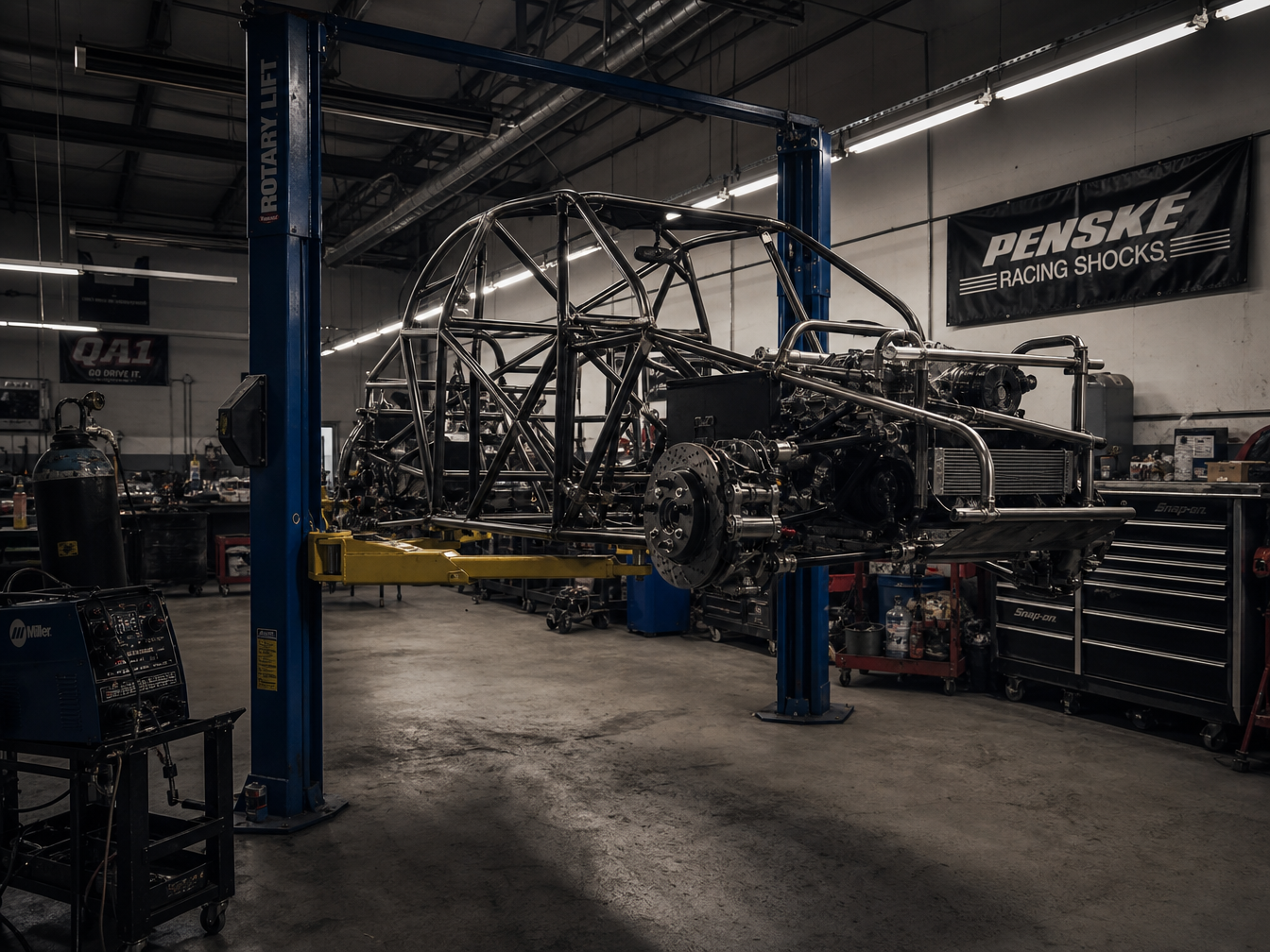
Performance Shop Website Built for the High-Ticket Build Buyer
Your website has one job before a buyer ever picks up the phone: make them trust you enough to call. A $15,000 forced induction build. A full engine rebuild on a platform the buyer has been planning for two years. That buyer is not looking at your prices before they call. They are deciding whether your shop is the kind of operation that can be trusted with something that matters to them — before you say a word.
In a market where anyone with a lift and a Facebook page can claim to do performance work, your digital presence is the credential. The shop with the right site wins the inquiry. The shop without one gets the call from the customer who already signed somewhere else.
- Performance Exhaust & Intake
- Forced Induction (Turbo / Supercharger)
- Dyno Tuning
- Safety & Roll Cage Fabrication
- Track Day Prep Guide
- "Why Your Build Won't Pull"
- Platform Pages: LS, Coyote, Hemi, 2JZ, EJ
- Import & Domestic Performance Pages
- Street vs. Track Performance Pages
- Brakes, Fuel Systems, Cooling
- Drivetrain & Axles
- 3 Featured Build Showcases
- Drag Prep / Street Performance / Track Day
- Additional Platform Pages: RB26, K-Series, RD28
- Speed Shop Category Architecture
- Brand Partner Pages (Garrett, Precision, Edelbrock)
- Wiring, Electronics & Data Acquisition
- Local SEO Pages by City
Each site is pre-built in a dedicated performance shop design system — dark, technical, built for the track — and rebranded with your name, number, location, and story in under two hours. Live in five days from signature.
The website is not sold separately. It is the foundation of the Osiris infrastructure package, rented as part of the monthly engagement. Osiris owns the asset. You operate with full access. That arrangement exists because accountability runs in both directions — Osiris is as accountable to the performance of what it builds as you are to the work you put on the dyno.
One Page on This Domain Is Worth More Than Any Ad You've Ever Run
When your shop joins the Osiris network, you get a dedicated profile on osirisautoguild.com — the Osiris-owned specialty automotive directory. One vetted shop per specialty per city. That is the consumer-facing function. The infrastructure function is what most shops never think about until they see it working.
The DFW Guild page is live and active. My Detail Guys — a founding network node, 17 years in business, 510+ Google reviews — has a dedicated external profile on osirisautoguild.com documenting every infrastructure change Osiris made and every result those changes produced. That profile is written by Osiris, from an external perspective, and links back to the shop. That is what Guild membership looks like at full execution.
The Guild is the consumer-facing face of the network. The network node program is how adjacent service shops plug into it, and how we manage every client's infrastructure is what keeps the whole system performing.
The Revenue You're Already
Generating — and Losing.
during business hours
never call back
outside business hours
Fri evening to Mon morning
with missed-call text-back
to poor post-quote follow-up
The work your shop is already doing generates more revenue than you're capturing. 62% of inbound calls to small service businesses go unanswered during business hours — not because shops don't want to answer, but because the phone is tied up. A customer asking for a build status update. Someone calling about a part that came in. The buyer inquiring about a $15,000 engine build at 2:30PM hears a busy signal and calls the next shop. 85% of callers who can't reach a business on the first attempt never call back.
After hours, the gap widens. 56% of new leads arrive outside business hours. From Friday evening to Monday morning, your phone goes dark for 61 hours. The buyer who found you Saturday night after watching lap footage from a local event is gone by Monday morning. The shop that responded — even by text — got the appointment.
The higher the ticket, the more expensive the gap. A buyer sitting on a $30,000 build decision is not going to leave a voicemail and wait. They sent inquiries to three shops on a Saturday. One responded with a text at 9PM. That shop got a 45-minute conversation on Monday morning and closed the job before lunch. The other two didn't know they were in the running.
The Osiris CRM closes both gaps. Missed-call text-back fires within 60 seconds of a hung-up call, recovering up to 93% of leads before they reach the next Google result. After-hours handling queues the lead for a first-thing callback. Post-quote follow-up runs automatically on a structured cadence. When you lose a call, you are not losing a transaction. You are losing the build, the dyno sessions after it, the cage work, and the referrals from three people in the same track club. The CRM does not create new demand. It stops the demand your shop is already generating from leaking to a faster competitor.
Big Networks Fail When They Try to Be Everywhere at Once. We're Not Doing That.
Every company that has tried to build something like this has made the same mistake: spread to as many cities as they can reach, sign one or two shops per city, and discover that a half-built network produces nothing for anybody. Referrals require volume. Volume requires a complete network behind it. A directory spread thin across twenty cities is just a list of shops who paid for a promise.
Osiris operates on a different rule: one complete region before touching the next one. The Texas Triangle is the first region. Dallas–Fort Worth, Houston, San Antonio, Austin — treated as one economic unit, because that is already how the market behaves. Customers, shops, and specialty automotive commerce move freely between those four cities in ways that don't respect city lines. The Osiris network formalizes what was already happening.
And the execution reality: every DFW prospect can be called in a week. While those calls are working through the pipeline, Houston outreach begins. While Houston is in motion, San Antonio and Austin follow. The cities are worked in parallel because the outreach cadence allows it — and because artificial sequencing within a region that already has economic ties serves no one.
The commitment: every anchor vertical and universal node category across all four Texas Triangle cities — 100% filled — before Osiris opens in another state. Not majority-filled. Not mostly done. Complete. After the Triangle is proved across multiple cities with different competitive conditions: other states.
This is the same territory and anchor model laid out in how Osiris works and the full vision behind the build — and the position it describes is the one explained in who the anchor is for.
- Treating the Texas Triangle as one region — DFW, Houston, San Antonio, Austin
- Working all four cities in parallel as the call cadence allows
- 100% anchor and node fill across the Triangle before any other state
- Building founding node proof in DFW before the anchor network opens
- Slots that fill stay filled — the design intent is a permanent partner, not a revolving door
- Opening another state before the Triangle is complete
- Opening city Guild pages before the anchor pipeline backs them
- Signing anchor clients we haven't vetted
- Treating a few clients in each city as a network — it isn't one
The proof is already live. Two founding network nodes — My Detail Guys and My Upholstery Guys, Dallas–Fort Worth, inside the Osiris network since 2025 — produced 48% gross revenue growth, doubled full-time headcount, and 73 new Google reviews in 8 months. That happened before the first anchor vertical ever signed in DFW. Infrastructure alone did that. The anchor network and referral layer activate on top of that foundation.
That infrastructure was built by an operator who came up in the specialty trades, not in marketing — the Osiris story.
What Performance Shop Owners Ask
Before the First Call.
Every other agency serves whoever will sign. Osiris works exclusively in specialty automotive — race and performance, 4x4, diesel, powersports. That is not a positioning statement. It determines everything about how the infrastructure is built.
A generalist agency cannot write a forced induction page that means anything to someone comparing a Garrett GTX to a Precision 6466. They cannot build a "Why Your Car Is Leaving Power on the Table" page that captures a frustrated buyer and routes them to your dyno. They do not know that a dyno tuning customer's search behavior looks nothing like an engine build customer's. When they build a site, they adapt a template. When Osiris builds a site, every page targets a specific search a specific buyer in your vertical actually performs.
The second difference is structural. Osiris operates on territorial exclusivity — one anchor client per vertical per metro territory. When your slot is filled, no competing shop in your market gets the same infrastructure. Osiris's competitive intelligence and content strategy are pointed at your territory, not diluted across your direct competitors.
The third difference is the model. The website is rented as part of the infrastructure package — Osiris owns the asset, maintains it, and is accountable for its performance. When performance falls short, the arrangement ends. That accountability does not exist with agencies that invoice for a website and move on.
Revenue growth in a specialty performance shop comes from three places: capturing more of the demand already coming in, increasing the average job value, and expanding the geographic reach of the shop's reputation.
The first is the fastest. The average specialty performance shop misses 62% of inbound calls during business hours, loses 56% of new leads that arrive after hours, and lets 21% of quoted jobs die from poor follow-up. Those are not lost customers — they are customers who tried to give the shop money and were not caught. Missed-call text-back, after-hours lead capture, and automated post-quote follow-up recover that revenue without adding headcount.
The second requires positioning. Shops that dominate their local search presence for premium queries attract a higher-value buyer mix. The customer searching "forced induction build Houston" has a different budget than the customer searching "performance tune near me." Building the page architecture to rank for premium queries shifts the job profile over time — more full builds, fewer commodity jobs, higher average repair order.
The third compounds over years. A shop with a dominant local presence eventually earns the right to target surrounding suburbs and metro-wide searches for its specialty. A race shop that builds the right infrastructure can rank for "race shop Houston" without moving a single tool.
The biggest profit opportunities in a specialty performance shop are not in raising prices. They are in closing the gap between the leads you generate and the revenue you actually capture.
62% of inbound calls to small service businesses go unanswered during business hours. Up to 75% of afternoon calls are existing customers asking for build status updates — non-revenue calls blocking the line while a new $15,000 engine build rings twice and calls a competitor. 85% of callers who can't reach a business on the first attempt never call back.
The second gap is post-quote mortality. 21% of high-ticket buyers disqualify a shop specifically because of poor communication after a quote is issued. A $15,000 forced induction build quote that goes quiet for three days does not lose on price — it loses on silence. Automated follow-up sequences maintain contact through the customer's decision cycle and recover jobs that would otherwise disappear.
The third lever is the average job profile. Performance shops that build the search infrastructure to be found for premium work — platform-specific pages, build showcase content, discipline-specific pages — attract a higher-ticket buyer mix over time. The shop ranking for "forced induction specialist Houston" is not competing on price with anyone.
The performance buyer searches before they call. Not for "auto shop near me" — for specific things. "turbo install shop Houston." "Dyno tune near me." "Performance engine builder [city]." These are buyers, not researchers. They have already decided what they want and are now deciding who to trust with it.
The shops that show up for those searches get the call. The shops that don't, don't.
Getting more customers starts with being visible when those searches happen. Platform pages built to rank for platform-specific queries. Service pages targeting the modifications your buyers search for by name. A Google Business Profile that is managed, posted to weekly, and pulling reviews consistently — because the map pack is where the majority of local search clicks go.
Speed matters as much as visibility. 78% of buyers purchase from the first business that responds. A shop that ranks and answers fast wins the customer over a shop that ranks but lets the call go to voicemail. Missed-call text-back, after-hours lead capture, and a structured first-response system turn search visibility into booked appointments.
The ceiling most performance shops hit — two or three bays full, a small crew, word of mouth and Instagram keeping the pipeline alive but not building anything — comes from one structural decision made early: relying on referrals and social as the primary growth engine.
Word of mouth scales with the number of satisfied customers you have today. Infrastructure scales with search volume — which is always larger than the network of people who happen to know someone who knows your shop. A buyer in your city searching "turbo shop" or "dyno tune" at 10PM on a Saturday has never heard of you, will never find you through a referral chain, and will call whoever ranks for that search and responds first.
The shops that grow past the ceiling make two decisions early that the shops that stay there don't. They invest in infrastructure before the return is obvious. And they build a system that captures demand rather than waiting for it to arrive by word of mouth.
The combination compounds. Word of mouth becomes more powerful paired with a dominant search presence because every referral validates what the buyer already found online. The shop that someone recommends AND ranks first AND has a site that reflects the quality of the work closes at a different rate than the shop that only has the referral.
SEO for a performance shop is different from general automotive SEO because your buyer does not search broadly. They search for specific platforms, specific services, and specific combinations of both.
The foundation is vehicle-platform pages — one page per major platform your shop works on. LS-swapped builds, 2JZ and 1JZ platforms, Subaru EJ and FA engines, Ford Coyote, Nissan RB26, Honda K-series. Each page speaks to that buyer in the language they use when they search — not "performance engine" but the specific code they already know by heart.
The second layer is service pages — engine builds and internals, forced induction, dyno tuning, roll cage fabrication, brake and fuel systems, data acquisition. Each page targets the queries that buyer performs when they know what they need and are choosing a shop.
The highest-intent targets in the vertical are platform-plus-service combinations and discipline-specific pages. A page built around "2JZ build shop Houston" does not get traffic from researchers — it gets traffic from buyers who already have the donor car and are deciding where to bring it. Drag prep, street performance, forced induction, and dyno tuning all have distinct buyer search patterns that deserve their own page architecture.
On top of the page architecture, Google Business Profile is the local SEO pillar that cannot be skipped. Consistent management, weekly posting, and active review nurturing determine map pack position — where the majority of local search clicks go before the organic results below.
One Shop Per Market.
One Territory Per Vertical.
Osiris operates on territorial exclusivity. One anchor client per performance vertical per metro territory. When a slot is filled, it stays filled. No competing race shops receive the same infrastructure in the same market.
Exclusivity runs both directions. The anchor holds the territory. Osiris holds the standard. The anchor is accountable for the quality of work they put out. Osiris is accountable for the performance of what it builds. If either side fails to hold their end, the arrangement ends — and the territory either reopens or transfers.
If your market has an open slot, the conversation starts now. If your market is filled, you go on the waitlist. Waitlists are how slots have historically become available.